- Investigate how you are introduced and cited in AI answers
- Standardize official information about authors and media
- Publish original, evidence-backed content AI can cite
- Monitor and improve mentions, descriptions, and citations
Understand GEO fundamentals
1. Investigate how you are introduced and cited in AI answers
For questions that do not include an author or publication name, check whether AI discovers your work as a relevant source for the topic. For queries that do include a name, check whether the answer describes the person’s expertise and published work accurately. Separating these tests distinguishes a visibility gap from inaccurate information about an already recognized source. The table below maps types of questions to what to check in the answer and citations.
AI search answers can change by service and over time. Record the question, check date, answer, and cited sources, and compare under the same conditions.
Don’t create a large number of questions at once; start with the core topics of your publishing. Even the same question can produce different answers and citations depending on audience, assumed knowledge, and usage conditions, so fix the variables you want to compare. Save initial questions and results and check again after improvements under the same conditions.
2. Standardize official information about authors and media
Provide consistent basic information on public pages so AI can identify who you are and your areas of expertise.- Author, creator, or publisher name and profile
- Topics you consistently cover and target audience
- Verifiable expertise: experience, credentials, affiliations, awards, and selected work
- Editorial policy, information verification practices, advertising/sponsorship handling
- For each article, video, or audio: author/participants, publish date, update date
- Relationship between official website and social, video, and audio channels
- Contact, corrections, and citation instructions
3. Publish original, evidence-backed content AI can cite
Don’t just increase general explanations; create content that can serve as evidence in answers.- Independent research, aggregation, verification methods
- Concrete examples from real experience, interviews, or observations
- Explanations that clarify terms, procedures, and comparison criteria
- Figures, quotations, and references with verifiable sources
- Answers to frequently asked questions from readers
- Ongoing summaries that show update dates and change history
4. Monitor and improve mentions, descriptions, and citations
Regularly check the same questions and compare whether introductions, explanations, and cited pages have changed since the last check. When you find changes, don’t attempt to correct only the AI answer—improve the public information that serves as its source. The table below maps states you may observe in AI answers to the initial public information to check and improve.Apps you can use for GEO
Use these apps to check whether public pages are discoverable and to publish or update source content.
Google Search Console: Check search impressions, clicks, and index status of public pages that AI can reference.

WordPress: Use for creating, publishing, and updating author info, articles, research, and Q&A.

note: Use for creating, publishing, and updating articles and Q&A on note.
NoimosAI does not need to be connected to AI search services. NoimosAI will investigate mentions and citations across major AI answers for you.
Put GEO into practice with NoimosAI
Review how AI answers describe you, standardize official information about your authors and publication, publish evidence-backed content, and monitor the same questions over time. For instructions on entering a prompt in chat, see Enter your own prompt.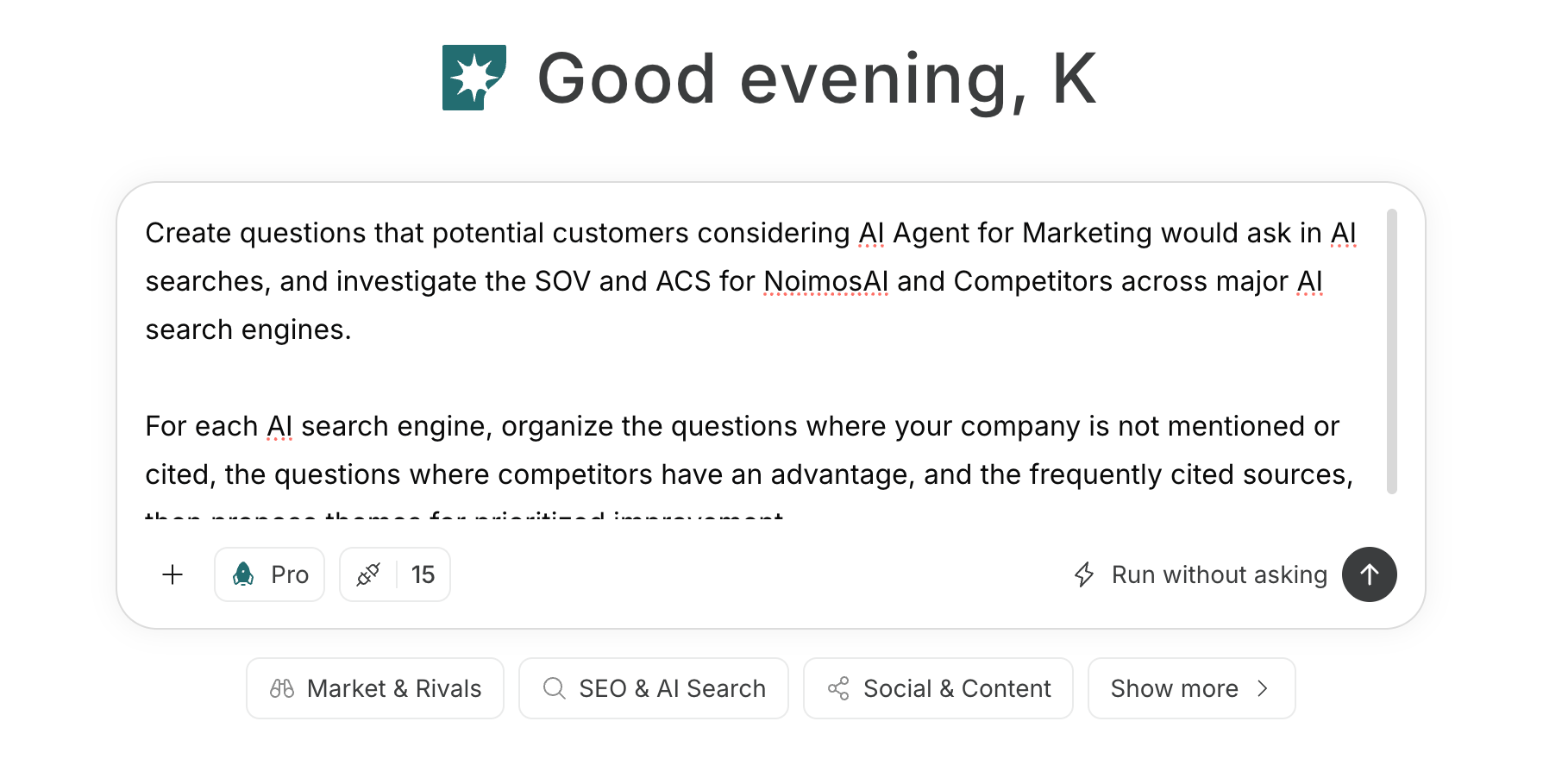
1. Investigate how you are introduced and cited in AI answers
First, craft questions your target audience would ask AI about your topic and check how similar authors and media are introduced. Organize not only whether you’re mentioned, but which expertise is attributed, what content is cited, and what information is missing.Prompt for chat
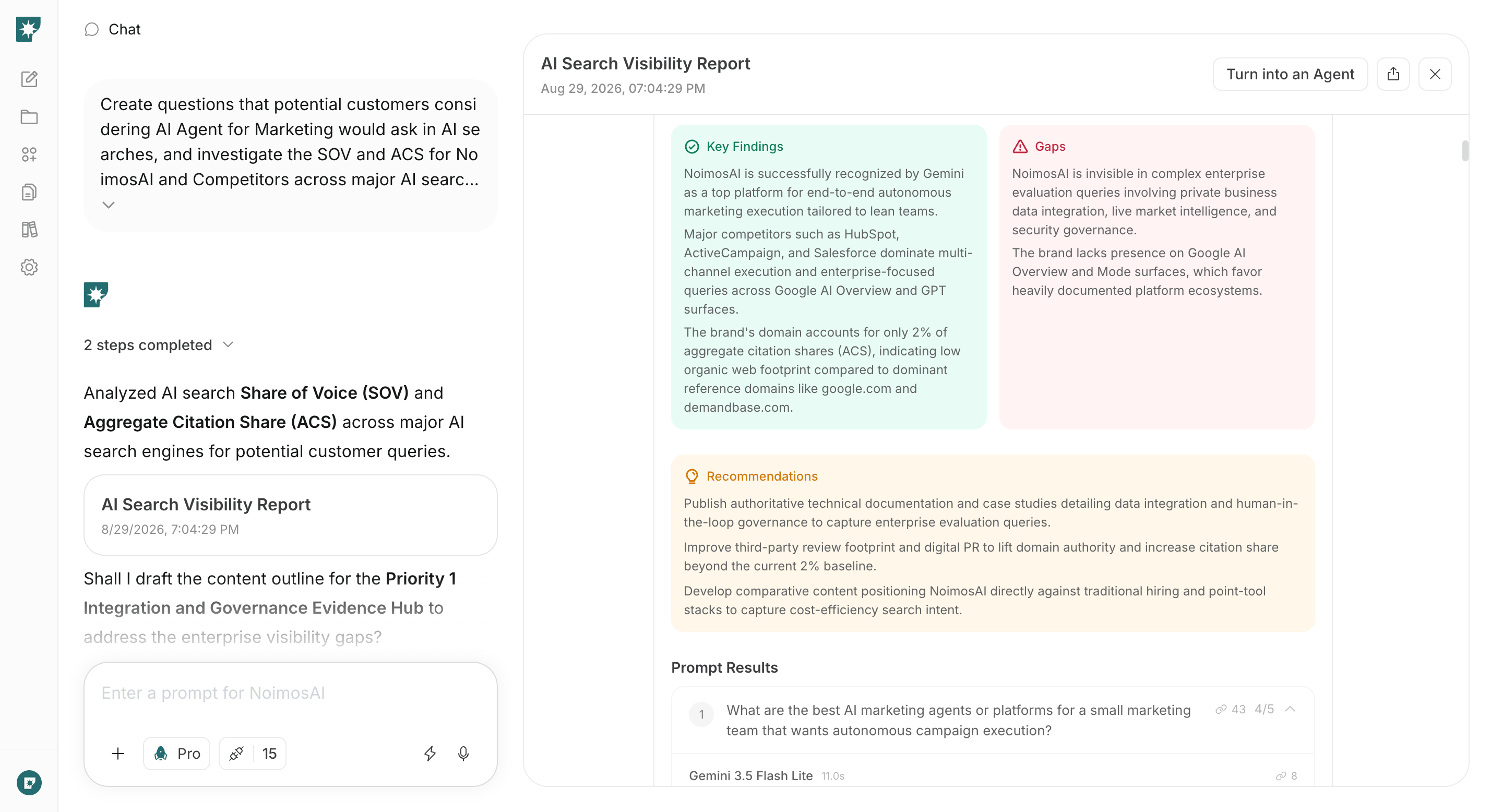
2. Standardize official information about authors and media
Audit your website and distribution channels to fix ambiguity, inaccurate descriptions, and missing information found in the previous step. Check how authors, creators, or publishers are named; how their expertise and experience are documented; and how editorial policy, authorship, and publication dates are displayed. Then create the pages and copy needed to correct the gaps.Prompt for chat
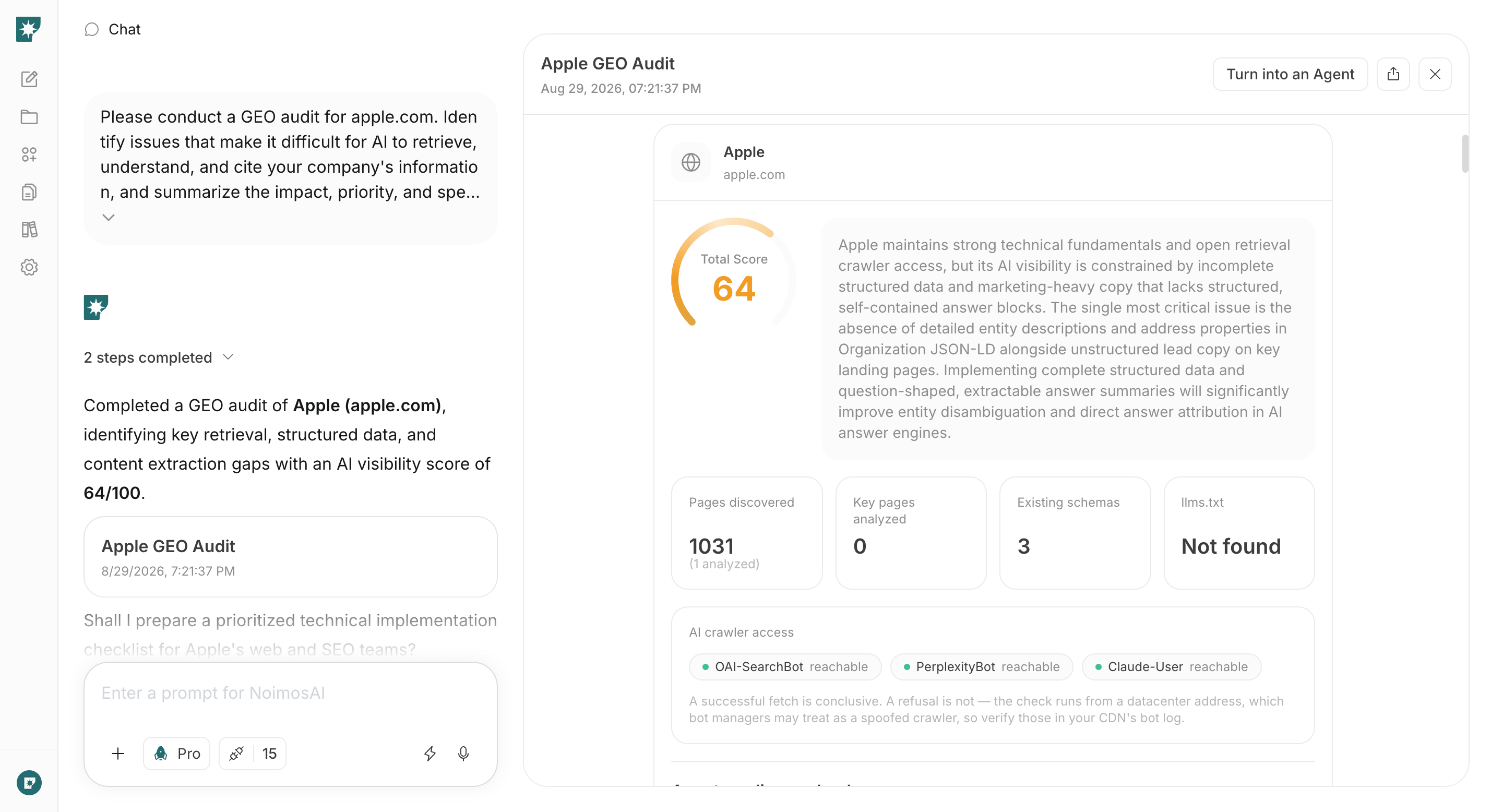
3. Publish original, evidence-backed content AI can cite
Choose one question that AI answers do not cover well and publish original research, experience, interviews, or test results as the primary source. Ask NoimosAI to structure the conclusion, method, results, interpretation, limitations, and sources into a final draft that readers can verify and AI answers can cite.Prompt for chat
4. Monitor and improve mentions, descriptions, and citations
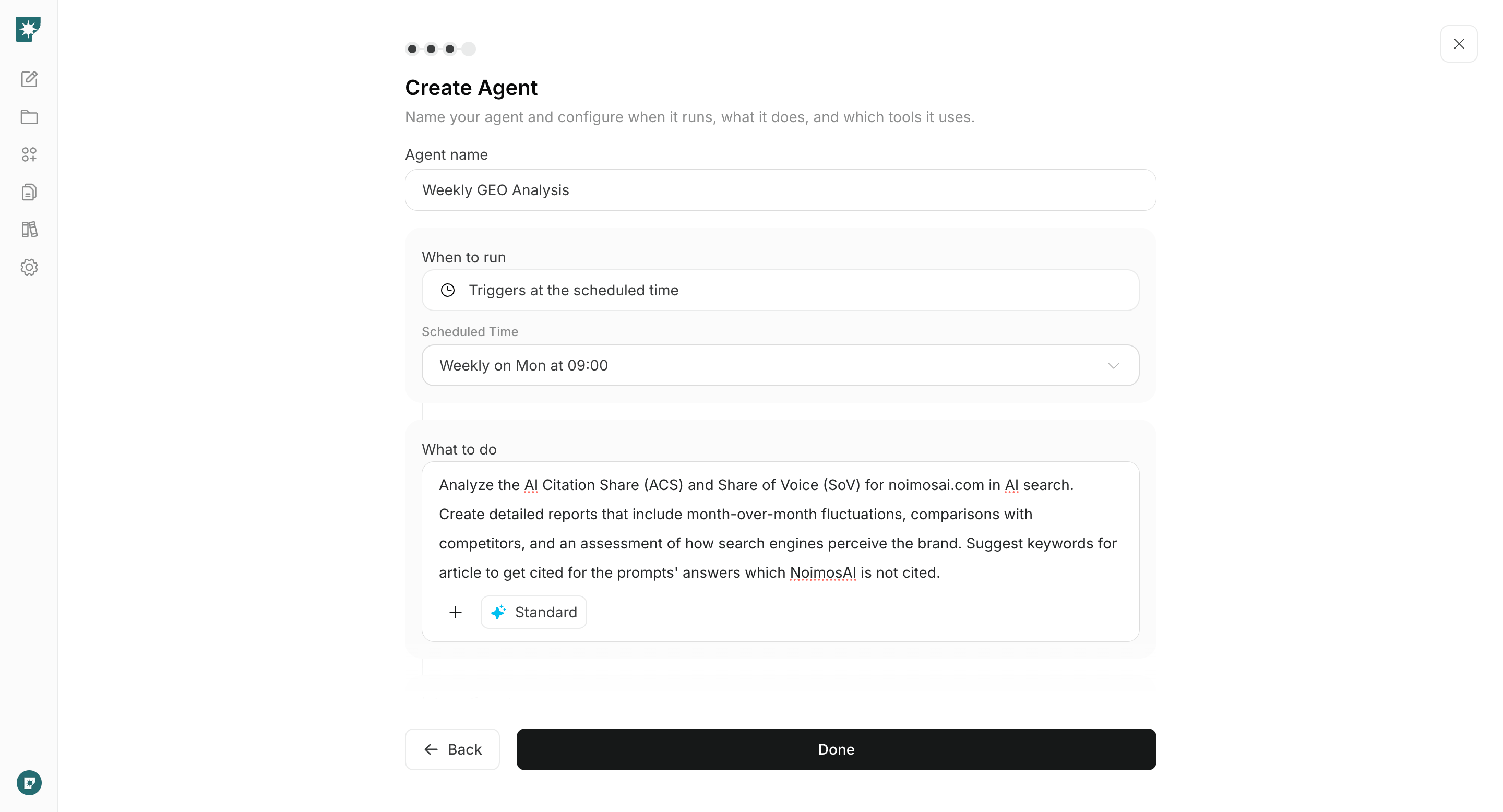
Monthly, check the same questions used in the initial investigation under the same conditions and compare changes in mentions, descriptions, and cited sources. Don’t stop at mention count changes—identify inaccurate descriptions and outdated citations, and create an agent that proposes official pages to update and concrete fixes.Agent setup
Trigger: Schedule / Monthly Instructions: